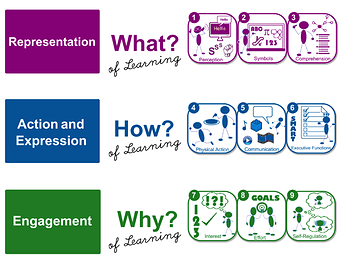
"For no child to be excluded from—or left behind by—the general curriculum, the curriculum itself must be examined and re-designed from a fresh perspective, much in the same way that buildings, environments, and products were critically examined by the original advocates of universal design in architecture resulting in important and lasting changes in building standards" (Jackson, 2010). Universal Design for Learning (UDL) calls for teachers to be flexible in their requirements and expectations at three stages of the learning process. Initially diverse students require that information is presented in diverse ways with multiple means of representation. Secondly, students need differentiated options for how they respond to curriculum content and multiple ways to express what they know. Finally, teachers need to find multiple ways to motivate and engage students so that they are motivated to learn. For more information about what UDL is and why it is necessary for student success, visit:
http://www.udlcenter.org/aboutudl/whatisudl.